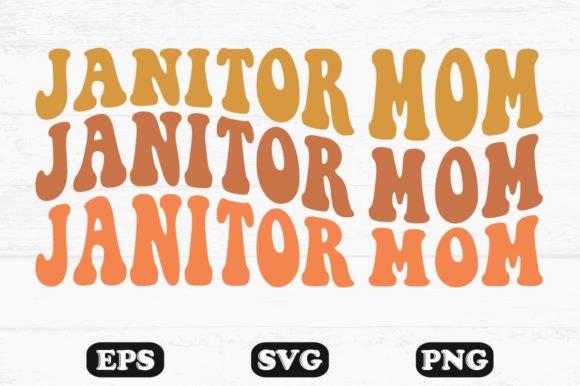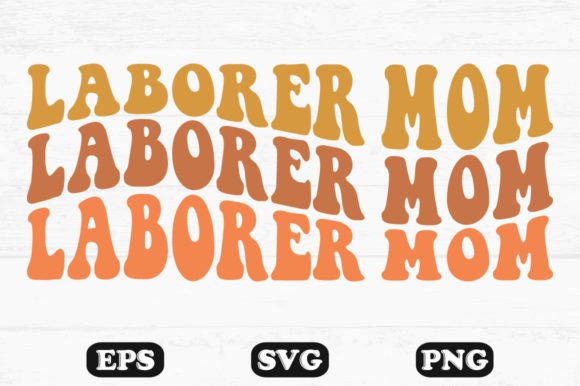
Laborer Mom Retro Wavy T-shirt Designs
First Impressions: A Nostalgic, Hand-Drawn Vibe That Feels Warm—Not Cliché
When I opened the Laborer Mom Retro Wavy T-shirt Designs bundle, what stood out wasn’t just the wavy baseline—it was the intentional looseness in the letterforms. This isn’t a rigid digital font stretched into a curve; it’s typography with breath, weight, and subtle irregularity. As an embroidery designer who’s stitched hundreds of “Mom”-themed pieces for baby blankets, aprons, and boutique totes, I appreciate how this design avoids saccharine perfection. It lands somewhere between vintage diner signage and a hand-lettered chalkboard—approachable, grounded, and quietly proud.
Real Project Test: Embroidering a Linen Kitchen Towel for a Local Craft Fair
Last week, I used Laborer Mom Retro Wavy T-shirt Designs on a heavyweight natural linen towel—intended as a small-shop merchandise piece for a local bakery’s “Mom & Maker” pop-up. I chose a medium-density satin stitch for the letters (no fill behind them) and paired it with soft ecru thread on oat-colored fabric. The result? Instant warmth. Customers paused—not because it screamed “look at me,” but because it felt like something they’d want to hang in their own kitchen. That’s the quiet strength of this design: it reads as handmade *before* you even touch the fabric.
Where It Shines—and Where It Needs Thoughtful Handling
Laborer Mom Retro Wavy T-shirt Designs works beautifully on stable, medium-to-heavyweight fabrics: canvas tote bags, cotton sweatshirts, denim aprons, and structured pillow covers. Its gentle wave gives movement without sacrificing legibility—even at 3.5" wide. On baby onesies? Use caution: the lower curve dips close to the baseline, and tight curves can blur in fine-gauge knit. I’d recommend testing on scrap first and possibly simplifying the bottom wave if stitching for newborn sizes.
For caps or curved surfaces, keep the design under 4" wide and avoid placing it near the bill seam—tight bends exaggerate stitch tension issues. On dark fabric, high-contrast thread (like charcoal gray on navy or mustard on black) lifts the retro tone without looking harsh. On light fabric, try muted olive or terracotta—colors that echo mid-century palettes rather than defaulting to black or white.
Stitching Realities: Density, Detail, and Fabric Respect
This is not a dense fill-stitch monolith. It’s primarily outline-driven—ideal for satin-stitched lettering or clean running-stitch interpretations. That means less stabilizer bulk, faster stitch time, and better drape on softer garments. But it also means small details—like the subtle taper on the “L” or the softened serif on the “M”—need sharp digitizing. If your embroidery file lacks crisp vector-to-stitch translation, those nuances vanish. Always check the stitch density preview before hooping: too sparse, and the wave feels disconnected; too dense, and the rhythm collapses.
On textured fabrics like terry cloth or bouclé, use a tear-away + cut-away hybrid stabilizer. The wave’s flow depends on consistent fabric support—especially where the line rises and falls across seams or folds (think: pocket edges on aprons or side seams on tees).
Commercial Use Considerations for Craft Businesses and Etsy Sellers
If you’re listing embroidered products using Laborer Mom Retro Wavy T-shirt Designs, remember: this is a Graphics-category digital embroidery file—not a physical item. Your value lies in execution: thread choice, fabric pairing, placement, and finishing. A well-stitched version on a heavyweight organic cotton tote reads as premium; the same design on a thin poly blend tee can look washed out. For Etsy listings, pair it with honest mockups showing both light and dark backgrounds—and include a note about recommended hoop size (likely 4x4 or 5x7) and ideal fabric types.
As a craft business owner, I’ve found this design resonates strongest when paired with complementary elements: a tiny embroidered wrench icon beside it on a mechanic mom’s apron, or a single sprig of rosemary stitched below it on a chef mom’s tea towel. It invites customization—not overload.
Design Integrity and Customer Trust
Customers buying handmade products don’t just buy the item—they buy intention. Laborer Mom Retro Wavy T-shirt Designs supports that. Its retro styling feels considered, not trend-chasing. When stitched cleanly, it signals care—not just in the embroidery, but in the curation. That builds trust, especially for personalized gifts (e.g., “Laborer Mom” + baby’s name on a nursery pillow) or holiday embroidery where sentiment matters more than flash.
That said, avoid overusing it across every product line. Its charm lies in specificity. It fits best on items tied to work, craft, care, or quiet strength—not generic apparel. Think: embroidered patches for tool rolls, sweatshirt backs for trade-school grads’ moms, or framed hoop art for a carpenter’s home office.
Practical Designer Notes Before You Stitch
- Test the design on scrap fabric *with your exact thread and stabilizer combo*—wavy lines behave differently on cotton vs. linen vs. fleece.
- Check small details in both black-and-white and color mockups. Does the wave hold its shape at 3" wide?
- Review licensing: confirm whether the SVG bundle permits commercial embroidery use, resale of finished products, or inclusion in digital embroidery kits.
- Compare contrast on light and dark fabric swatches—some retro tones recede on busy prints or heathered yarns.
- Use proper stabilizer for your fabric type—especially important where the wave creates directional tension (e.g., upward arcs pull differently than downward ones).
- Ask yourself: does this serve the *person*, not just the phrase? “Laborer Mom” implies dignity in work—not just motherhood. Let that guide your presentation.
Final Thought: A Design That Earns Its Place
Laborer Mom Retro Wavy T-shirt Designs doesn’t shout. It settles in—like a favorite apron, a well-worn tote, or a handwritten note tucked into a lunchbox. Used thoughtfully, it elevates everyday crafts into meaningful handmade products. Whether you’re stitching for a client, prepping for a craft fair, or building a cohesive brand around skilled, grounded makers—it earns its spot in your embroidery project toolkit. Just remember: the wave only works when the foundation—the fabric, the stitch, the intent—is steady.