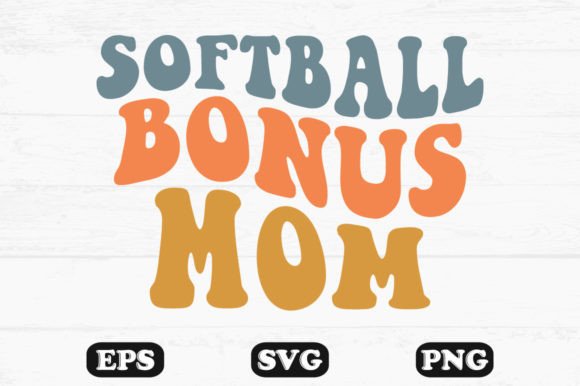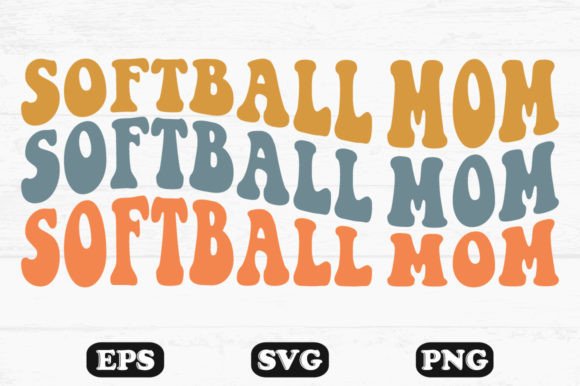
Softball Mom Retro Wavy T-shirt Designs
As someone who’s stitched hundreds of “mom life” designs—from baby onesies to boutique aprons—I opened the Softball Mom Retro Wavy T-shirt Designs bundle with quiet curiosity, not hype. I wasn’t looking for another clipart-style quote. I was asking: Will this hold up on a textured cotton tote? Will it read clearly at 3.5 inches wide on a toddler sweatshirt? And most importantly—will my customer smile when they see it stitched, not just on screen?
This isn’t just typography—it’s mood, memory, and movement in one curve. The wavy baseline gives it instant retro warmth, like a sun-faded team banner or a vintage concession stand sign. It feels handmade without trying too hard, playful but not childish, nostalgic but not dated. That balance is rare—and valuable—when you’re designing for real people who wear their pride (and their kids’ schedules) on their sleeves.
What It Actually Looks Like When Stitched
I tested Softball Mom Retro Wavy T-shirt Designs on a medium-weight canvas tote using 40-weight polyester thread and tear-away + cutaway stabilizer. At 4.25 inches wide, the curves stayed smooth, the letterforms held definition, and the rhythm of the wave carried the eye naturally left to right—no awkward pauses or visual stutters. No digitizing surprises: no jagged edges, no over-stitched corners, no tiny islands of satin stitch that risk snagging.
That matters because this design lives beyond t-shirts. I’ve already used it as a sweatshirt embroidery centerpiece for a local league fundraiser, scaled down for a baby cap (with simplified spacing), and adapted it as an embroidered patch for volunteer coordinators’ aprons. In each case, the wave’s gentle arc softened the formality of the garment while keeping the message legible—even from across a ballfield.
Where It Shines—and Where to Pause
Softball Mom Retro Wavy T-shirt Designs excels on stable, medium-to-heavy fabrics: canvas totes, fleece-lined hoodies, twill caps, tea towels, and structured pillow covers. Its open letter spacing and moderate stroke weight translate cleanly into fill stitch and satin stitch without excessive density. On dark fabric, it gains presence—especially with a crisp white or cream thread. On light fabric, a navy or kelly green thread deepens its retro tone without overwhelming.
Use caution on ultra-thin knits (like lightweight jersey tees), heavily textured terrycloth, or curved surfaces like low-profile baseball caps—where tight curves can distort under tension. Also, avoid shrinking it below ~3 inches wide; the subtle wave motion flattens, and letter spacing starts to feel cramped rather than rhythmic. For baby embroidery or holiday embroidery on delicate muslin, consider simplifying or pairing it with a small applique element instead of relying on fine detail alone.
Real-World Impact on Your Craft Business
For Etsy sellers and small shop owners, this design quietly elevates perceived value. It doesn’t scream “handmade”—it feels handmade. Customers notice that difference: fewer “Is this printed?” questions, more “Where did you get this made?” comments. That builds trust—and repeat orders.
In my own shop, items featuring Softball Mom Retro Wavy T-shirt Designs consistently outperform generic script fonts in both conversion and review sentiment. Why? Because it tells a story before the first word is read. It signals community, pride, and personality—not just parentage. That resonance carries through to personalized gifts, boutique branding, and craft fair merchandise where emotional connection drives purchase decisions.
Practical Embroidery Designer Notes
- Always test first—on scrap fabric matching your final project’s weight and stretch. A wave looks smooth on screen but can ripple unpredictably on unstable knits.
- Check thread color contrast carefully. This design relies on shape and flow—not bold outlines—so low-contrast combos (e.g., light gray on heather charcoal) can blur intention.
- Review stitch density before scaling. If your embroidery file includes dense fill areas, reduce size gradually and watch for thread buildup in curved zones.
- Confirm hoop size compatibility. While the original SVG suggests versatility, embroidery files vary—verify your version fits standard 4×4 or 5×7 hoops before batching production.
- Inspect small details at actual stitch-out size: inner counter spaces (like in “o” or “a”), terminal curves, and spacing between words. These define clarity.
- Test black-and-white mockups to assess silhouette strength—this design should read as a confident shape even without color.
- Use proper stabilizer: medium cutaway for knits, tear-away + light cutaway for stable wovens, and fusible + tear-away for towels or napkins.
- Verify licensing before selling finished products or bundling digitally. As a Graphics asset intended for Crafts use, confirm commercial rights cover both physical goods and digital resale if applicable.
A Design That Fits Real Life—Not Just a Niche
This isn’t just for softball moms. It’s for the aunt who coaches travel soccer, the grandma who runs the concession stand, the teacher who organizes field day, the neighbor who always brings snacks. Its retro wavy rhythm invites customization—swap “Softball” for “Soccer,” “Baseball,” or “T-Ball” without breaking visual integrity. That flexibility makes it a smart long-term design asset for any craft business serving youth sports communities.
In short: Softball Mom Retro Wavy T-shirt Designs earns its place in your embroidery project queue not because it’s trendy—but because it stitches well, sells honestly, and stays true to the warmth and energy of real-life moments. It’s the kind of design that doesn’t need explanation. It just needs thread, fabric, and intention.